KnowGovRepresentation. Influence. Action.

KnowGov 101

How government works

119th Congress

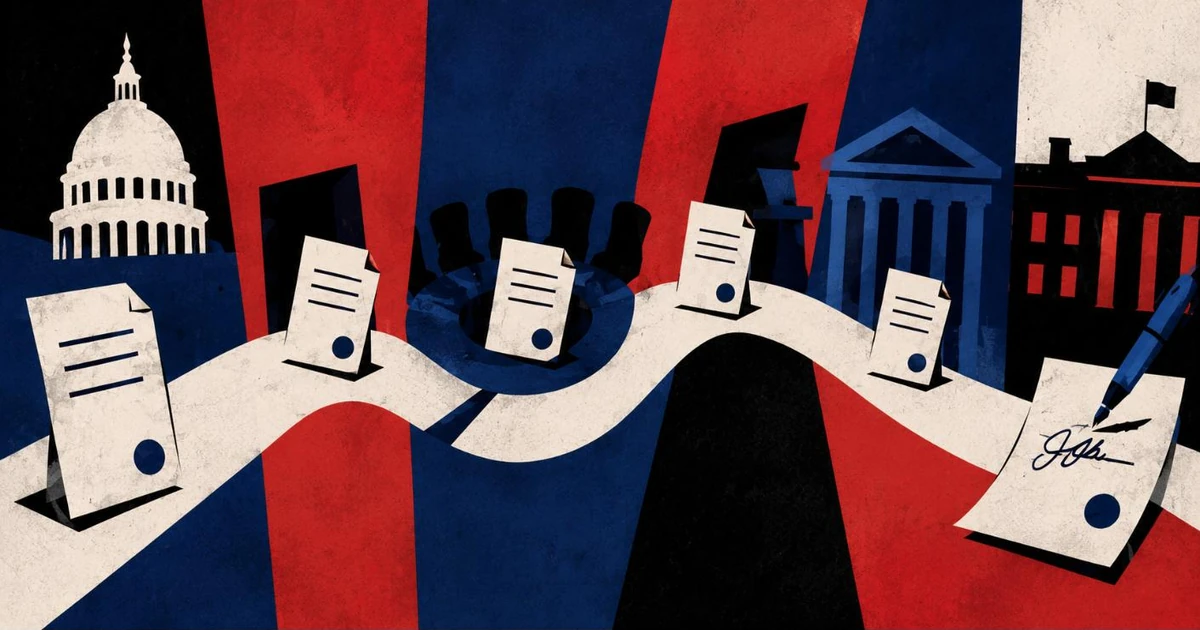
The path every federal bill follows — most never finish it.

  1. 1

    Introduced

    The bill is formally filed and given a number.

    A member of Congress introduces the bill by filing it with the clerk of their chamber. It's assigned a number — H.R. for House bills, S. for Senate bills — and its text is published for the public record.

    Introduction only signals intent. Thousands of bills are introduced each Congress, and the large majority never advance beyond this first step.

    Typical timing

    A single day — introduction is a formal filing.

    What to watch

    Early cosponsors. Broad, bipartisan support right after introduction is one of the clearest signals a bill has real momentum.

    What's next

    The bill is referred to the committee (or committees) whose jurisdiction covers its subject.

  2. 2

    Referred to Committee

    Sent to the committee that specializes in its topic.

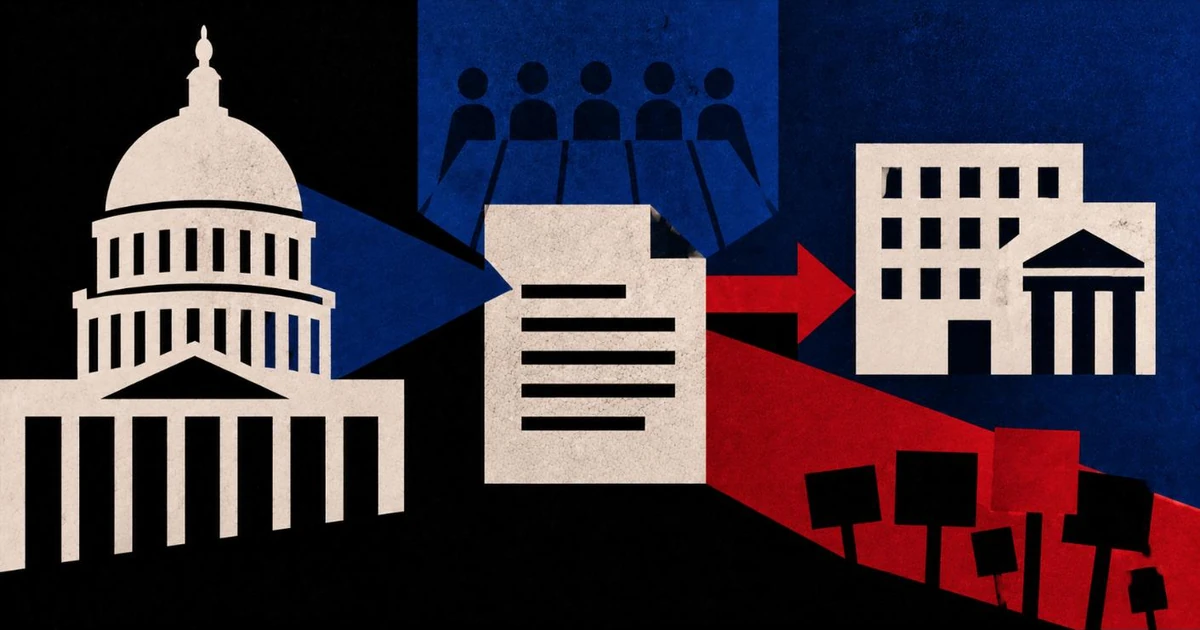
    The presiding officer refers the bill to one or more standing committees based on subject-matter jurisdiction. Committees are where the substantive work of Congress happens.

    A bill can be referred to several committees at once. Most bills stop here — a committee that never takes the bill up is the most common way legislation quietly dies.

    Typical timing

    Immediate on paper; a committee may hold a bill for weeks, months, or the rest of the two-year Congress.

    What to watch

    Whether the committee actually schedules a hearing or markup. Silence usually means the bill is going nowhere.

    What's next

    Committee consideration — hearings, a markup, and a vote on whether to advance it.

  3. 3

    Committee Consideration

    Hearings, amendments, and a committee vote.

    The committee studies the bill and may hold hearings where experts, officials, and the public testify. It then holds a 'markup', debating and voting on amendments to the text.

    If the committee votes to approve (or 'report') the bill, it advances to the full chamber, usually with a written report explaining it. Subcommittees often handle the first round of work.

    Typical timing

    Weeks to months, depending on how much of a priority it is.

    What to watch

    The markup vote and the committee's report — they set the version of the bill the full chamber will debate.

    What's next

    The bill is placed on the chamber's calendar for a floor vote.

  4. 4

    Floor Vote

    The full chamber debates and votes.

    The full House or Senate takes up the bill, debates it under the chamber's rules, may amend it further, and votes. In the House, the Rules Committee sets the terms of debate.

    In the Senate, most legislation needs 60 votes to overcome a filibuster before a final vote. Passage itself requires a simple majority of members voting.

    Typical timing

    A few hours to several days of debate.

    What to watch

    The final vote margin and any floor amendments — a narrow margin or a changed text shapes what happens next.

    What's next

    If it passes, the bill goes to the other chamber to repeat the whole process.

  5. 5

    The Other Chamber

    The second chamber takes its turn.

    The chamber that didn't originate the bill now considers it through its own committees and floor vote. It can pass the bill unchanged, amend it, or reject it.

    If the two chambers pass different versions, they must reconcile the differences — often in a conference committee — so that identical text passes both. Only then can it move forward.

    Typical timing

    Weeks to months, and it can stall entirely.

    What to watch

    Whether the second chamber amends the bill. Any differences have to be resolved before it can become law.

    What's next

    Once identical text clears both chambers, the bill is sent to the President.

  6. 6

    Signed into Law

    The President signs — or vetoes.

    After both chambers pass identical text, the bill is 'enrolled' and sent to the President, who can sign it into law or veto it.

    A veto can be overridden by a two-thirds vote in both chambers. If the President takes no action for 10 days while Congress is in session, it becomes law automatically; if Congress has adjourned, it dies by 'pocket veto'. Signed bills become Public Law with their own number.

    Typical timing

    Up to 10 days for the President to act.

    What to watch

    A veto threat. It often reshapes a bill long before it ever reaches the President's desk.

    What's next

    The bill becomes law and takes effect on the date it specifies.

SENATEHOME DISTRICT
Independence Day Recess
HOUSEHOME DISTRICT
Independence Day Recess

Congress operates on market hours — Mon–Fri, 9am–6pm ET. Nights, weekends & recesses are off-hours.

July 2026
SUN
MON
TUE
WED
THU
FRI
SAT
1
2
3
4
5
6
7
8
9
10
11
12
13
14
15
16
17
18
19
20
21
22
23
24
25
26
27
28
29
30
31
In SessionHome District / RecessWeekendOne Chamber Only

Synced from senate.gov · majorityleader.gov · 119th Congress, 2nd Session. Schedules subject to change by leadership at any time.